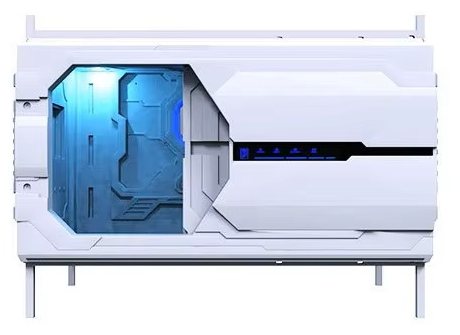
Single-Layer Smart Version
A single-layer soundproof sleeping pod: one cabin at a comfortable height. White.
- Cabin size (L × W × H)
- 2.06 × 1.14 × 1.5 m6′9″ × 3′9″ × 4′11″
- Inner space (L × W × H)
- 1.93 × 0.95 × 1.1 m6′4″ × 3′1″ × 3′7″
- Colour
- White
The Sleeping Pods sells soundproof sleeping pods: private, ventilated cabins with a softly lit blue interior, a built-in sound system and a smart TV. Each sleeping pod is built from ABS plastic of the kind used in aircraft and high-speed rail interiors. Choose a single-layer or double-layer sleeping pod.


A sleeping pod is a compact, enclosed cabin made for short daytime rest or a night's sleep. It gives one person a bed-sized space of their own inside a shared building, so rest happens where people already are.
The Space Smart Sleeping Pod has a smooth white ABS shell, a window lit in soft blue and a control panel with indicator lights on the front. You can choose the single-layer version for one cabin, or the double-layer version that stacks two cabins and adds a ladder to the upper one.
Each cabin is soundproofed and ventilated, and includes a built-in sound system and a smart TV. The inner sleeping space is 6'4" (1.93m) × 3'0" (0.95m) × 3' 7" (1.1 m), the same on both versions.
Every sleeping pod from The Sleeping Pods is soundproofed, so you can lie down in a quiet cabin even in your own home, a busy airport, office, hostel or gym.
Ventilation keeps fresh air moving inside the soundproof sleeping pod, and the built-in sound system and smart TV let you listen to something soothing or watch before you rest.
Choose the single-layer sleeping pod for one cabin, or the double-layer sleeping pod for two stacked cabins. See sleeping pod pricing.

Tired people are common, and most buildings give them nowhere to lie down and nap in peace. A pod turns a small corner into a rest area.
Both versions share the same inner sleeping space. The double-layer stacks two cabins to use the height of a room.
A single-layer soundproof sleeping pod: one cabin at a comfortable height. White.
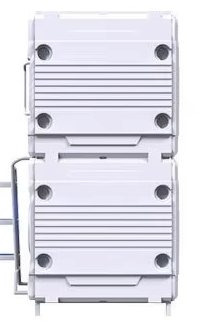
A double-layer soundproof sleeping pod: two cabins stacked, with a ladder to the upper one. White, or a custom colour on batch orders.
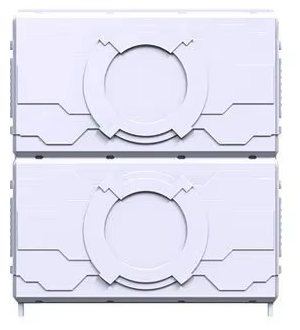
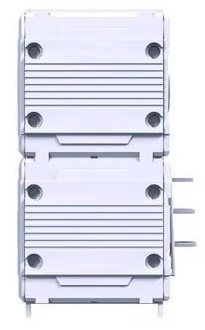
Smooth white panels, a round service panel on the back and ribbed side walls. Shown on the double-layer version.

A short checklist, with the figures that matter for this pod. Read the full sleeping pod buyer's guide.

Tell us which version you want and how many. We ship to all of the USA and Canada and reply with a quote.
My story
For years, I couldn’t sleep through anything. A neighbour’s lawn mower, a motorcycle on the road at midnight, someone trimming a hedge at eight in the morning, even the sound of a person breathing next to me was enough to wake me up. Once I was awake, I stayed awake.
Today I sleep in a sleeping pod in my bedroom. It’s the best change I’ve ever made for my sleep, and I want to explain why.
If you sleep lightly, you know this already. Other people drift off to the hum of traffic. I lay in bed and heard everything.
A car door closing outside. A truck braking at the corner. A couple of people talking on the sidewalk. A dog two houses away. Then the daytime sounds: a mower starting, a hedge trimmer buzzing, a chainsaw cutting through a Saturday morning I had hoped to sleep through.
Each noise did the same thing. My eyes opened, my heart picked up speed, and my brain switched on. Then came the worst part: lying there trying to get back to sleep, getting angrier by the minute. I wasn’t only tired. I was frustrated at the world for being loud.
Over time the problem moved from the bedroom into my head. By late afternoon I would start to dread the night. I wondered whether tonight would be another one where I’d wake up three times, or four, or not sleep at all.
That fear alone made it harder to sleep. I would lie down already tense, listening for the next sound before it happened. I tried earplugs, and they hurt my ears and still let low rumbles through. I tried white noise machines, and I ended up hearing both the machine and the noise. I tried heavier curtains and a fan. None of it solved the real problem, which was that I had no protection from sound.
Broken sleep doesn’t stay in the bedroom. It followed me everywhere.
I was tired by mid-morning and irritable by noon. I lost patience with the people closest to me over small things. I snapped at questions that deserved a calm answer. I cancelled plans because I had no energy. When I did show up, I wasn’t really present.
My partner’s breathing, a sound that should have been comforting, became something I resented. I’m not proud of that. It made me feel guilty, and the guilt made the nights worse.
I also worried about my health. Chronic tiredness wears you down, and I felt it in my mood, my focus and my patience. I knew I couldn’t keep going like this.
I had looked at every ordinary fix. Moving wasn’t realistic, and I couldn’t make the neighbourhood quiet. What I needed was a space that kept the noise out instead of trying to drown it.
That’s when I looked into a sleeping pod: a compact, enclosed sleeping space designed with soundproofing, ventilation and comfort in mind. The idea made sense to me. If I couldn’t change the noise outside, I could change what surrounded me while I slept.
I put a sleeping pod in my bedroom, and I’ll be honest: I was nervous. I had been let down by so many sleep solutions that I expected another disappointment.
The difference was obvious right away. When I closed the door of the pod, the room went quiet in a way I hadn’t known was possible. The world outside was still there, but it was muffled and distant.
The pod has soundproofing built in, along with ventilation so the air stays fresh, so it never felt closed in. It also has a sound system and a smart TV, so I can wind down with something I like before sleeping, or just enjoy the quiet.
I fell asleep faster than I had in years. When a vehicle passed outside, I didn’t notice. When the neighbour fired up the lawn mower, I slept on. For the first time in a long time, I woke up because I was rested, not because something startled me.
The change wasn’t only about sleep. It spread into every part of my life.
A sleeping pod isn’t only for people like me, but if any of this sounds familiar, it may help you too. You might be a light sleeper, someone who lives near traffic, a shift worker sleeping during the day, or a person sharing a home with noisy neighbours or a snoring partner. If you’ve tried earplugs, white noise and everything else, and you’re still waking up every night, a soundproof sleeping pod deserves a serious look.
Quiet is not a luxury when it decides whether you get through the day well. For me, it was the missing piece.
For years I believed I was just a bad sleeper who would always be tired. The truth was simpler: my environment was working against me. Once I changed my environment, everything else improved.
My sleeping pod gave me my nights back, and with them my health, my patience and my peace of mind. If you’re tired of being woken by every little sound, I’d encourage you to find out what a sleeping pod can do for you.
See our soundproof sleeping pods, or get in touch with any questions. Email info@thesleepingpods.com or call 208-905-4960.
This article describes one person’s personal experience and is not medical advice. If you have ongoing trouble sleeping, talk to a health professional.
Sleep research
A sleeping pod is an enclosed, dimmed, comfortable space built for rest. Once a novelty on tech campuses, the sleeping pod now shows up in hospitals, universities, airports and hostels. People are short on sleep, and rest is the first thing traded away for work, caregiving and screens. So what does the research show about sleeping pods? Studies from a hospital ward, a children’s hospital and a sleep lab point the same way, with limits worth knowing.

Night shifts take a heavy toll on health workers, and the NHS has recently put national funding into rest facilities. A 2021 study in Future Healthcare Journal tested an EnergyPod, a purpose-built nap pod, in the acute medical unit at Sandwell and West Birmingham NHS Trust. Staff completed a survey before the sleeping pod was installed and again three months later. Users also answered a short survey right after each session.
The share of staff taking breaks of 30 minutes or more rose from 37% to 69%. Among people who used the pod, 81% felt more alert and 83% felt more energised, and half said they felt more able to drive afterward. That last figure matters, because tiredness on the drive home after a night shift is a real safety risk.
Part of the value is behavioural. A designated sleeping pod gives staff organisational permission to rest, which removes the awkwardness of napping at work. The study relied on staff surveys, so it measures perceived benefit, not objective performance.

Few people sleep as badly as the parents of a seriously ill child. In 2014, Ronald McDonald House Charities Toronto opened a Family Room at SickKids hospital with seven aviation-inspired sleeping pods near children’s bedsides. The layout fit more than twice as many sleep spaces into the same square footage as earlier designs.
Researchers from SickKids and the University of Toronto then studied 97 family caregivers between March 2017 and July 2018. Participants wore a wristwatch-style sleep tracker for four days and five nights, kept a sleep diary and completed tests of sleepiness, fatigue and stress. Fourteen also gave interviews.
Caregivers who slept away from home got their best sleep in the Family Room sleeping pods, and that sleep was linked to feeling less tired during the day. The study’s co-leads concluded that pods support good sleep outcomes and a positive experience for families, and said the findings could guide more caregiver sleep spaces in or near patient rooms.
A sleeping pod does more than offer a place to lie down. It controls light, noise, privacy and posture. A study indexed on PubMed shows why the environment counts. Researchers tested an actively temperature-controlled mattress cover, compared nights with it off against nights with it on, and measured sleep stages, time to fall asleep, sleep efficiency and total sleep time with a home sleep test device. Participants also rated comfort and sleep quality each morning. The paper reports that a week on the device improved sleep and cardiovascular recovery.
That product is a bed accessory, not a nap pod, even though it shares the “Pod” name. The lesson carries over: a sleep space tuned for comfort produces better sleep, which is the idea behind a well-designed sleeping pod.
Broader nap research supports these findings. In a NASA-linked study, 91 volunteers lived on 18 different sleep schedules for ten days. Longer naps performed better, and memory benefited most. In the Chennai trial, a 30-minute afternoon nap in a quiet, comfortable place raised productivity by 14%. At the University of Michigan, a 60-minute nap left participants feeling less impulsive. In a French study, two 30-minute naps brought stress hormones back to normal after a night of two hours’ sleep.
The strongest case is where tired people still have to function: night-shift workers, caregivers, students and drivers. For them, a sleeping pod makes rest easy to take, and the research suggests that rest pays off in alertness, energy and safer decisions.
See our sleeping pods, or get in touch with any questions. Email info@thesleepingpods.com or call 208-905-4960.
This article summarizes published research and is not medical advice. If you have ongoing trouble sleeping, talk to a health professional.